Showing posts with label foreign tastes. Show all posts

Monday, December 24, 2012

Tut, Tut, It Looks Like Rain

Earlier this year, we were fortunate to be able to spend 8 glorious days in the United Kingdom.  While food is not typically what England is known for, we completely enjoyed partaking of a number of typical British culinary experiences. First, afternoon tea:

 Bruce does the honors in Manchester.


Then, pub chow in London. First, pot pies and boiled vegetables.
 Then, fish and chips with mushy peas!
Although our waistlines would never allow this type of cuisine all the time, we enjoyed the exploration.

Catching Up...

So, anyway, I went to China a few times this year. 6, in fact. A total of 16 weeks. I'm back now and still catching up on all sorts of things including remembering how to cook for myself and how to eat something other than rice. It's a long story. 

Meanwhile, I'm on a mission. While I was gone, riding out a Category 5 Typhoon from the 20th floor of my 4 star hotel (see, I *told* you it was a long story!), my husband was weathering a 4-day power outage and trying to save the summer's worth of meals I had cooked and stored in our second freezer. Luckily he was successful. He also ate well whilst I was gone and I'm now on a mission to restock our freezer for the winter. Since there is no snow yet, ski season has not come into full swing, I'm back in the kitchen wreaking havoc. 

AND, I have new inspiration!! Mary gave me this for my birthday: 


It's a collection of recipes from 7 different areas of the world, all vegetarian and all can be done in the crock pot. And, well, if you're going to get out the cutting board and the good knife, you might as well chop everything you can get your hands on. Right now, the Lebanese Eggplant Stew is simmering in the crock pot. Recipe below.


And my own bastardization version of the Potatoes and Peas in Red Curry Sauce is on the stove. As you can see in the picture below, there are no peas, and the curry is Yellow. Ok, so I improvised. Recipe below. 


Lebanese Eggplant Stew

1 eggplant, cubed
1 zucchini, cubed
3 tomatoes, quartered
1 green bell pepper, chopped
1 onion, chopped
3 cloves garlic, minced
1/2 teaspoon black pepper
1 teaspoon cinnamon
1/2 teaspoon allspice
1/4 teaspoon red pepper flakes
salt to taste
1 cup Aunt Tobi's homemade tomato sauce, or water


  • Combine all ingredients in slow cooker, mix well, cover and cook on low for 3-4 hours. 


Potato and Chick Pea Yellow Curry

1 onion, chopped
2 cloves garlic, minced
2 inches of ginger root, minced
1 red bell pepper, chopped
2 cans chickpeas, not drained
2 cups carrots, chopped
2 cups celery, chopped
2 cups potatoes, cubed
Salt to taste
2 tablespoons olive oil

1 can coconut milk
1 large sweet potato, baked, then mashed
2 heaping tablespoons Yellow Curry Paste
1 teaspoon cumin
1 bunch fresh cilantro, chopped


  • In large pot, heat olive oil, onions, garlic, ginger root and peppers. Saute till onions become translucent. Add small amount of salt. 
  • Add potatoes, carrots and celery. Mix well and turn heat to low. 
  • Add chickpeas. Stir.
  • In separate bowl, combine coconut milk, mashed sweet potato, cumin and yellow curry paste. Stir till well-mixed and smooth. 
  • Add curry mixture to vegetables. Stir well to mix.
  • Add chopped cilantro.  
  • Cover and cook on low till potatoes are soft. Stir occasionally. 

Sunday, September 30, 2012

Eating In Shanghai

I really wish that this post was a first-hand review of traditional Shanghai cuisine with details on local specialties and unusual culinary experiences.  However, when I travel for work, eating is a haphazard affair driven by unbelievably long work hours, dietary requirements of a globally diverse team, and proximity. So, I offer you the following smorgasbord of business-travel eating. Bon Appetite!
Room Service Roasted Chicken
When I’m travelling and jet lagged, sometimes plain uncomplicated food is helpful to settle my stomach and help me sleep. This thyme-roasted chicken with steamed rice and asparagus from the room service menu was perfect as a first-night-in-town meal in my room before passing out from the 24 hour journey.

October Mid-Autumn Festival
This latest trip coincided with the Mid-Autumn Festival in China. This is one of the most important holidays in China and is associated with the legend of Houyi, and eating Mooncakes. Mooncakes are offered between friends or on family gatherings while celebrating the festival.
Wikipedia describes mooncakes as “round or rectangular pastries, measuring about 10 cm in diameter and 4–5 cm thick. A rich thick filling usually made from red bean or lotus seed paste is surrounded by a thin (2–3 mm) crust and may contain yolks from salted duck eggs. Mooncakes are usually eaten in small wedges accompanied by Chinese tea. Today, it is customary for businessmen and families to present them to their clients or relatives as presents, helping to fuel a demand for high-end mooncake styles. The caloric content of a mooncake is approximately 1,000 calories (for a cake measuring 10 centimeters (3.9 in), but energy content varies with filling and size.” 
I found them to be very, very heavy eating, with the red bean variety having a flavor similar to fig newtons, minus the fig seeds.

Hello Kitty Coffee
Starbucks is ubiquitous in Shanghai. There is a Starbucks on-site at the office complex, and even though I don’t drink Starbucks coffee at home, it’s the best available. We drink a LOT of coffee when we’re working in Shanghai, thanks to jet lag and long hours. And yes, I did actually stir my coffee with my Hello Kitty pencil. I know.

How to stock a mini-bar:
Because the cafeteria at the office serves local style food of questionable provenance, and breakfast in the hotel is expensive, I’ve mastered the art of stocking the mini bar with groceries.
Yogurt, fruit, raw vegetables and diet soda take precedence over the standard mini-bar fare.  

Indian food with the Indians.

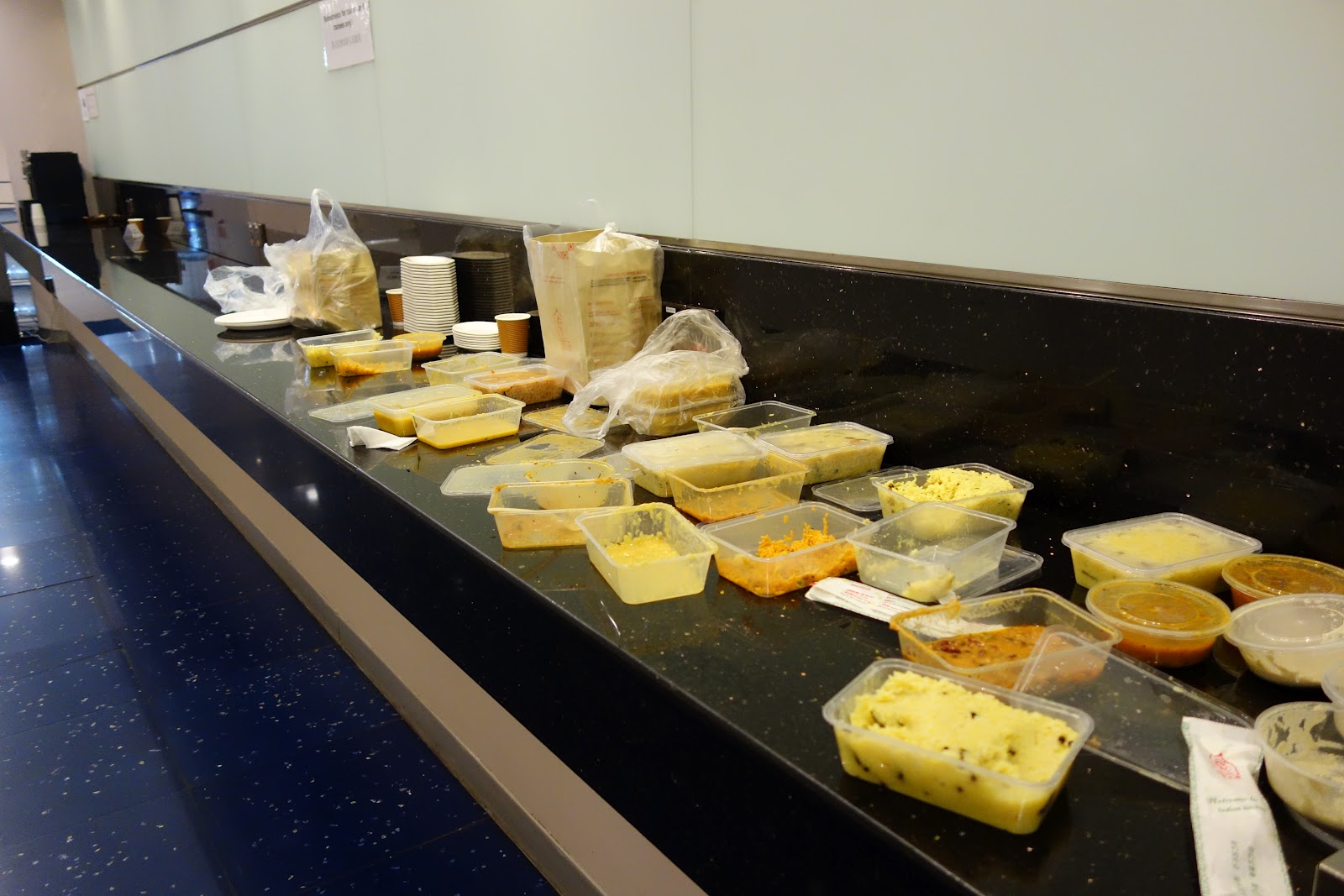
Chinese cuisine is not kind to vegetarians. On this trip, our team discovered India Kitchen, a local indian restaurant that delivers. The team has taken great pride in in ordering lunch every day…and single-handedly employing an entire fleet of delivery scooters.

Upscale Groceries - the Shanghai version of Whole Foods...
...If Whole Foods sold SPAM.
Bakery section

 Produce section

 Red bean granola

And there you have it…the business travellers tour of eating in Shanghai.


Wednesday, September 5, 2012

Talking Spices Again: Piquant

Someone asked what "piquant" meant in describing spices, and I didn't have a very good definition.

According to Wikipedia, "Piquance (pronounced /ˈpikəns/)[1][2] or piquancy, is the sensation commonly referred to as "spicy" or "hot" which is found in foods such as chili peppers. It is associated with the sense of taste, and in various Asian countries it has traditionally been considered a basic taste.

Use of the word "piquance" eliminates potential lingual ambiguity arising from overlap in meaning with the words "hot" and "spicy" which usually requires a determination or assumption of meaning based on context.

Instead of "hot" simply referring to temperature, and "spicy" being used to refer to the presence of spices (many of which are not actually piquant), the former two words are often used as synonyms for the latter, a word less commonly employed in reference to the characteristic which in regards to taste it solely defines, which is pain associated with the sense of taste.

For instance, a pumpkin pie can be both hot (out of the oven) and spicy (due to the common inclusion of ingredients in its recipe such as cinnamon, nutmeg, allspice, mace and cloves) but is not actually piquant. Conversely, pure capsaicin is piquant, yet is not naturally accompanied by a hot temperature or spices."


You'll recognize a spice as piquant when you get that feeling of prickliness or burning in your mouth and you wish someone would spritz you down with an old-fashioned bottle of seltzer, like in the Bugs Bunny cartoons.  Now we know!

Tuesday, September 4, 2012

Learning the Indian Spices

Welcome to my spice cabinet.  You'll notice that everybody is in a matching container. I've employed the same organizing design principle to my spices that I've used in my freezer: Using standard sized containers saves space! 


Now, meet the Indian spices. From left to right: Madras Curry Powder, Turmeric, Garam Masala, Coriander, Cumin, Cardamom Pods, and Black Mustard Seeds. Don't be scared.

Lets take them one by one. 

  • Madras Curry: I use Sun Brand, which lists the ingredients as Coriander Seeds, Turmeric, Chilies, Salt, Cumin Seeds, Fennel Seeds, Black Pepper, Garlic, Ginger, Fenugreek, Cinnamon, Cloves, Anise, and Mustard. This spice is piquant and peppery, so go slow when you add it.
  • Turmeric: This spice comes from another plant in the Ginger family, which is dried, oven roasted and ground into a powder. This spice has a pungent flavor, and is used as a dye, so be careful not to spill (or use wooden utensils) because it will stain. I use small amounts.
  • Garam Masala: In Hindi, garam means "hot" and masala means "mixture". Garam Masala is a mixture of a number of other spices and the variation varies from north to south in India, and from family to family. Typically, garam masala includes black and white peppercorns, cloves, cinnamon, cumin, black, green and brown cardamom pods. These are roasted together and ground. We've tried several brands but keep coming back to Williams-Sonoma's version (believe it or not). Your local Indian grocery will likely have several varieties to try.
  • Coriander: Coriander is the dried, ground seeds of our favorite herb, cilantro!
  • Cumin: The cumin plant grows from the east Mediterannean to India, which explains it's appearance in a variety of cuisines. The Spanish brought it to the Americas, which led to our preference for it in our modern day chili recipes. Cumin also has a peppery, pungent flavor, so add to taste.
  • Cardamom Pods: Cardamom is often used in sweet dishes and appears in Nordic baked goods. I first had cardamom in a Finnish easter bread. We add it to our spicy chick peas where it helps bring out the sweetness of the sweet potato along with the rich flavor of the garam masala.
  • Black Mustard Seeds: According to Wikipedia, four of the major religions include references to mustard seeds. Mustard seeds have the sharp flavor of our common mustard. I use only a few, and heat them in oil till they pop.
Now you've met the spices - time to experiment!

Thursday, August 30, 2012

What’s the Weirdest Thing you Ate in China?


This is the question that I’m asked most often when people hear that I’ve spent 7 weeks in Shanghai (so far) this year. By years’ end, I will have logged 10 weeks in China and nearly 100k air miles aboard United.

And the weirdest thing I’ve eaten? It’s the Jellyfish from Chinese New Year’s dinner. Think of fish flavored salty fruit leather, and you’ll know exactly what it tastes like.